


A World First!
Established 2002, we boast the biggest service menu in the world!.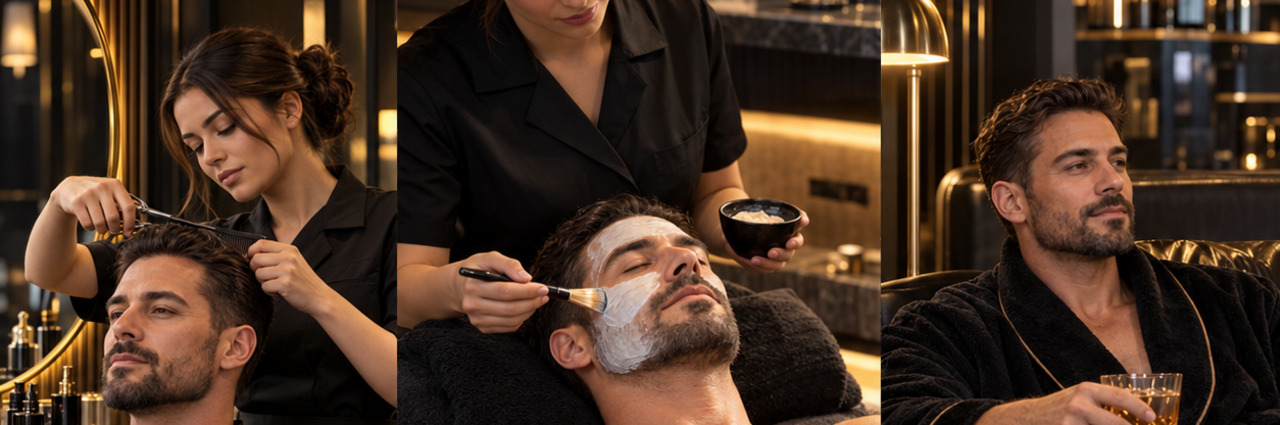
Need that special gift?
Then spoil that special someone with a gift voucher.
It's all for men!
Microneedling For Hair Growth


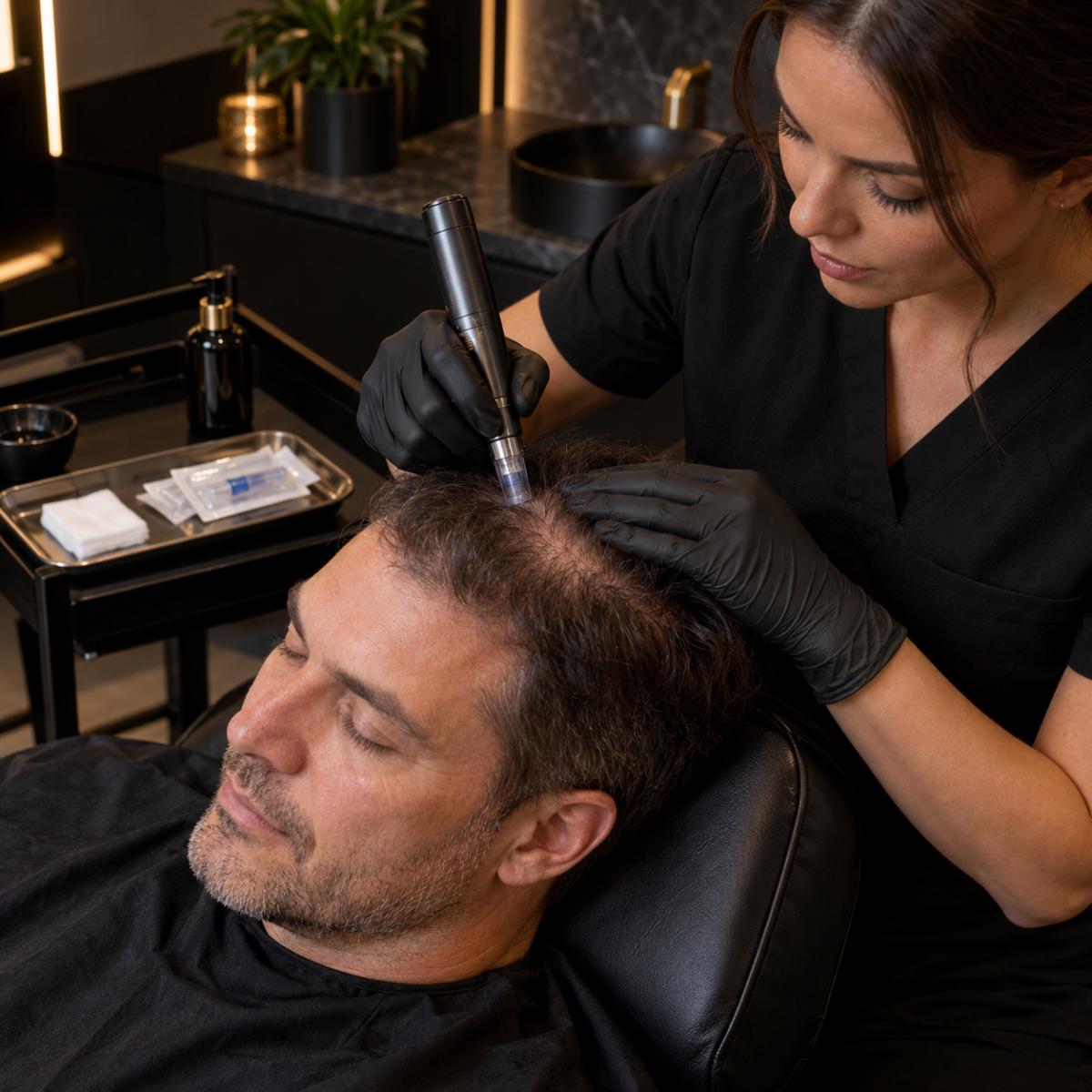
Scalp Microneedling for Hair-Growth Support
A targeted, non-surgical approach to thinning hair
Noticing changes in your hair can be confronting. You may be seeing more scalp through the hair, a widening part, reduced density through the crown or a hairline that no longer looks as full as it once did. Scalp microneedling offers a professional, non-surgical option for suitable clients wanting to take a more proactive approach to thinning hair.
What is scalp microneedling?
Scalp microneedling uses a professional device fitted with a sterile, single-use cartridge containing very fine needles. The device creates controlled microchannels at a carefully selected depth within the scalp.
This process initiates the skin’s natural repair response and is being studied for its potential to support hair count, hair diameter and the activity of existing follicles in some forms of non-scarring pattern hair loss.
Microneedling does not transplant hair, create new follicles or instantly replace hair that has already been permanently lost. Its purpose is to support the environment surrounding follicles that are still present and give suitable clients a structured approach to maintaining the appearance of their hair.
Who may benefit?
Following consultation and assessment, scalp microneedling may be considered for clients experiencing:
-
Early or progressive thinning through the top of the scalp
-
Reduced-looking density through the crown
-
A gradually receding or less defined hairline
-
Hair that appears finer than it once did
-
Diagnosed or suspected non-scarring pattern hair loss
-
Existing follicles producing progressively finer hairs
-
A desire to complement an established professional hair-care plan
-
A preference for a non-surgical treatment option
The earlier changes are recognised and appropriately assessed, the more realistic the treatment conversation can be. Microneedling cannot revive follicles that have been permanently destroyed by scarring or advanced follicular loss.
Your treatment begins with assessment
Hair thinning does not have one universal cause. Hormones, genetics, age, illness, medication, nutrition, stress, inflammatory scalp conditions and other factors may all influence changes in the hair.
Before recommending treatment, we will discuss your health history, medications, scalp condition, pattern and duration of hair loss, previous treatments and expectations. Digital scalp analysis may also be used to examine visible density, hair-shaft variation and the condition of the scalp.
If your hair loss is sudden, patchy, painful, inflamed or unexplained—or appears consistent with a condition requiring diagnosis—we will recommend medical assessment before proceeding.
What happens during treatment?
The scalp is carefully prepared and the hair is sectioned to provide clear access to the areas being treated. A sterile, single-use microneedling cartridge is then passed systematically across the selected areas using settings appropriate for your scalp, treatment plan and professional scope.
You may experience a prickling, vibrating or warm sensation during the procedure. Comfort levels vary between clients, and your therapist will communicate with you throughout the treatment.
Strict hygiene and infection-control procedures are followed. Products are not automatically applied over freshly treated skin; only formulations confirmed as appropriate for use with the treatment will be considered.
A course rather than a quick fix
Changes to the hair occur slowly because hair grows in cycles. Scalp microneedling is therefore generally approached as a planned course rather than a single treatment.
The number and frequency of appointments will depend on your scalp, the nature of your thinning, your response and whether you are following any healthcare-professional-directed hair-loss plan. Where appropriate, progress photographs or digital scalp images may be used—with your consent—to monitor visible changes over time.
Results vary, and no ethical treatment can guarantee new growth or a particular increase in density.
After your treatment
Temporary redness, warmth, tightness or sensitivity may occur and can remain for several days. You will receive aftercare instructions covering scalp hygiene, hair washing, exercise, heat, sun exposure and the use of styling or scalp products.
Avoid touching or scratching the treated area unnecessarily, and do not use home microneedling devices between professional appointments. Contact us promptly if you experience unexpected or persistent discomfort.
When treatment may not be suitable
Microneedling may need to be postponed or avoided when there is:
-
Broken, sunburnt or recently injured skin
-
An active scalp infection
-
Inflamed psoriasis, eczema or dermatitis
-
Unexplained sores, lesions or persistent irritation
-
A history of problematic scarring or poor wound healing
-
A bleeding condition or medication affecting clotting
-
A condition or medication affecting immunity or healing
-
Recent scalp surgery, hair transplantation or another invasive procedure
Medical clearance may be required in some circumstances.
Honest advice before treatment
Scalp microneedling is not appropriate for every person or every type of hair loss. Our role is to assess what is visible, work within professional boundaries and provide realistic information without promising results that cannot be guaranteed.
To arrange your scalp and hair consultation, call Mens Body Works on 03 9429 5400.
Mens Body Works — Grooming | Massage | Skin | Spa
Mens Body Works
 267 Bridge Road, Richmond, Melbourne, 3121
 +61 3 9429 5400
  +61 3 9421 4031